
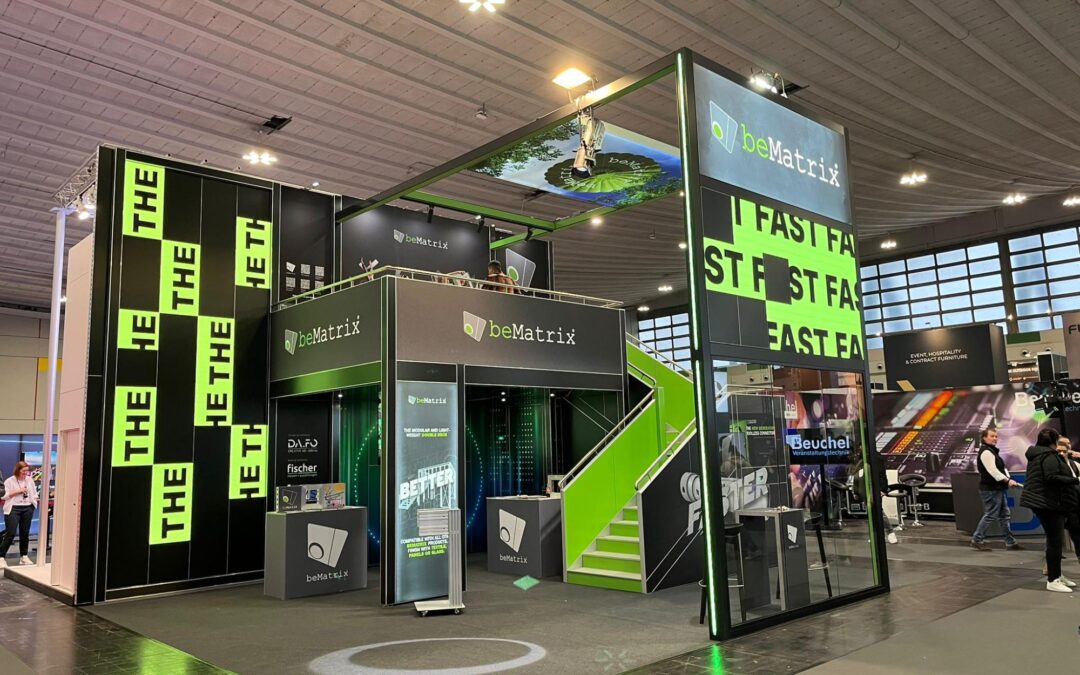
When attending a trade show, many exhibitors focus on the creative side of their stand, ensuring their branding is perfect, and the overall experience is one to remember. This means logistics can sometimes take a backseat. Yet, how your trade display stand gets from storage to the show floor, and how easy everything is to install, can make a huge difference between a calm, controlled setup and a rushed, stressful start to the event.
Planning transport, access, and assembly from day one helps ensure your trade show display stand arrives on time, is set up smoothly, and is ready to welcome guests when the doors open.
How Portable are Modular Display Stands?
When prioritising logistics, many businesses will consider modular display systems. These are made from aluminium frames and lightweight panels, so each component is robust enough for repeated use yet still easy to assemble. Many of these portable display stands pack into wheeled cases or compact crates, which fit into standard vans and can be manoeuvred through loading bays, lifts, and service corridors without specialist equipment.
Since each component is interchangeable, you only transport the modules you need for that specific booth size, rather than shipping a full custom build to every show. This makes it much easier to exhibit at multiple venues across London and the rest of the UK, while keeping transport costs down and preventing logistical headaches.
Planning Logistics Before Arrival
Regardless of where you’re exhibiting, planning is always essential to ensure everything goes smoothly on show day. Before you arrive at the trade show, work through these key areas:
- Inventory – Create a clear inventory of all components that will make up this particular trade display stand. Label everything with the stand name, event, and zone so the installation team can easily find the right parts.
- Transport – Decide whether to transport the trade show stand yourself or use an experienced logistics partner. Factor in time for traffic, unloading windows, and potential delays at major London venues such as ExCeL and Olympia.
- Build instructions – Keep a printed and digital copy of your build manual, including a step-by-step assembly for key components. Include a simple running order for the day, so the whole team follows the same installation plan.
- Venue requirements – Confirm your stand number, build and breakdown times, maximum stand height, and any rules you need to know. Ensure you have considered your risk assessments and that your insurance details are sorted in advance.
At Discovery Displays, we offer an end-to-end process that covers consultation, design, build, delivery, setup support, and reconfiguration. We ensure exhibition logistics are planned from the very first conversation, reducing stress and hassle at every trade show.
What to Expect at the Venue
When you arrive at the exhibition venue, the focus shifts from planning to execution. Knowing what to expect can help you make the most of the limited setup window.
- Loading access – Most venues have strict time slots for delivery vehicles and loading access, so arriving outside your window can mean long waits or extra fees. Check you have the necessary passes and which entrance, lift, or goods access is closest to your stand position, reducing pushing distance for cases and trolleys.
- Team coordination – Brief everyone before the installation, so everyone knows their role. Modular systems are designed for fast, tool-free assembly, making the build process as simple as possible. With a well-briefed team, a professional exhibition display stand can be built in hours, not days.
- Final checks – With the stand built, use a simple checklist to ensure your display is ready to welcome visitors. From structural and visual checks to ensure key messages and product areas are accessible, to lighting and technical checks to identify any issues before the show opens
- Storage – Consider where empty cases and spare components will be stored during the event so you can easily find them if needed. It’s useful to take a few photos of the finished layout too, these are invaluable when you reuse the same modular system at future trade shows.
Effective logistics planning brings everything together, from how your stand is packed and transported to how quickly it can be built on site. This enables your team to focus on finalising details and meeting visitors rather than handling setup issues.
Post Event Considerations
Once the show closes, a clear plan for dismantling and storage helps protect your modular stand for future use and even speed up future installations. Work through the breakdown in the reverse order of your build plan and pack all components back into their labelled cases. Check each item against your inventory as it’s returned to storage, making a note of any damage or missing parts so they can be repaired or replaced before the next event.
Think about where and how the trade display stand will be stored after the exhibition, whether it’s on your own premises or with a third party. Suitable storage is essential to protect components and keep cases organised, so it’s easier to reconfigure your modular system for future trade shows. You may even want to repurpose some components for in-store displays, pop-up stands or showrooms in between events.
Why Partner with Discovery Displays for Trade Show Display Stands?
It’s fair to say that modular exhibition stands from Discovery Displays are built around practical logistics. They offer lightweight components, adaptable layouts, fast assembly, and long-term reusability for multiple events. You also benefit from expert support on design, transport, setup, and storage to keep each show running smoothly.
If you are planning a trade show display stand for your next event in London or beyond, speak to our team at Discovery Displays for tailored advice, 3D stand concepts, and logistics support that takes the stress out of exhibiting. We will be happy to discuss your upcoming event and provide a quote for a modular stand that makes every trade show less stressful.